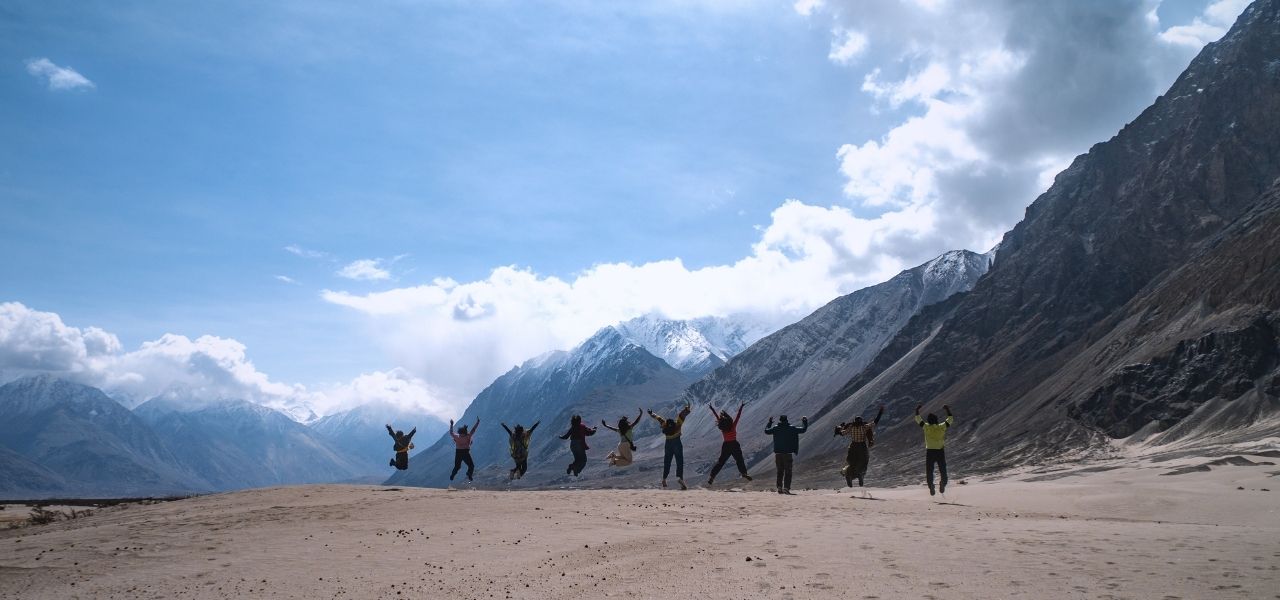
10 Day Road Trip
Available from
JUNE - OCTOBER 2026
Road Trip Highlights
Cost per person
The Ultimate Ladakh Road Trip is a complete 10-day high-altitude journey through some of the most spectacular and remote regions of Ladakh. Starting from Leh, this expedition takes you far beyond the classic Ladakh circuit, covering the dramatic landscapes of Kargil, Nubra Valley, Pangong Lake, Hanle, Umling La, and Tso Moriri.
The journey begins by exploring the historic Sham Valley before continuing towards Kargil through the remote Balti region of Batalik. Along the way, you will discover places such as Hunderman Village, Drass, Lamayuru and Pathar Sahib Gurudwara, experiencing the rich history, culture and landscapes that have shaped this fascinating part of the Himalayas.
From Kargil, the route continues towards Leh and Nubra Valley, where you will explore the remote villages of Turtuk and Thang, before travelling across the spectacular landscapes towards Pangong Lake. The journey then ventures deeper into eastern Ladakh, visiting the Rezang La War Memorial, crossing Umling La, and spending a night in Hanle, one of the world's most remote astronomical destinations.
The final leg takes you through the remote landscapes of Chumur and Tso Moriri, before crossing the high-altitude plains of Changthang and returning to Leh. With historic villages, ancient monasteries, borderlands, high mountain passes and some of the most extraordinary roads in the Himalayas, this journey is designed for travellers who want to experience Ladakh beyond the usual tourist circuit.
This is not just a Ladakh holiday, it is the ultimate Ladakh road trip.
View Full ItineraryYour Ladakh adventure begins with your arrival at Kushok Bakula Rimpochee Airport in Leh, one of the highest commercial airports in the world. Upon arrival, our representative will meet you at the airport and assist with your transfer towards Sham Valley, located in the western part of Ladakh.
The drive takes you through the dramatic landscapes of Ladakh, with the road following the Indus River through a fascinating contrast of barren mountains, rocky cliffs and pockets of green farmland and villages. The Sham region, also known as the Apricot Valley, is one of the gentler and more fertile parts of Ladakh, with traditional settlements and orchards appearing along the river valley.
As this is your first day in Ladakh, we deliberately keep the day easy. Rather than beginning with sightseeing or a demanding drive, we take you directly to your accommodation in Sham Valley, allowing you to settle in and begin acclimatising to the high altitude.
Once you reach your accommodation, the remainder of the day is at leisure. We recommend taking plenty of rest, drinking sufficient water and avoiding strenuous physical activity as your body adjusts to the altitude..
On our second day of the Ladakh Road trip, we leave Sham Valley and begin our journey towards Kargil, taking the scenic and less-travelled route through Batalik, one of the most remote and historically significant regions of Ladakh. The road follows the Indus River for much of the journey, with barren mountains, deep valleys and small settlements creating a dramatic backdrop as we travel westwards.
Our route takes us through the culturally fascinating Balti region of Batalik, an area known for its unique traditions and communities that have lived along the Indus Valley for centuries. The landscape here gradually becomes more rugged and remote, and the presence of military installations reminds us that we are travelling through a sensitive border region.
We then continue our drive towards Kargil, passing through the dramatic landscapes of the Suru region before arriving in town by evening. Kargil is culturally distinct from much of central Ladakh, with strong Balti and Purig influences, and has historically been an important link between Ladakh, Kashmir and the wider Himalayan region.
After checking into our accommodation, the evening is free to relax and explore the town at your own pace.
After breakfast, we set out from Kargil towards Drass, travelling through the dramatic landscapes of the Suru Valley. Surrounded by towering mountains, Drass is famously known as one of the coldest inhabited places in the world and is also deeply connected with the history of the 1999 Kargil War.
Our first major stop is the Kargil War Memorial, located in Drass at the foothills of the battlefield. The memorial stands as a tribute to the Indian soldiers who made the ultimate sacrifice during the conflict. The museum houses photographs, wartime equipment and various pieces of evidence and material collected during the war, including identification documents recovered from the battlefield. If you are fortunate to visit when one of the periodic briefings is being conducted, you can hear the story of the war narrated with remarkable enthusiasm and emotion - an experience that can genuinely leave you with goosebumps.
From the memorial, you also get a closer understanding of the extraordinary terrain over which the 1999 battles were fought, with views towards several of the famous peaks and ridgelines that became synonymous with the conflict, including Tiger Hill, Tololing Top and Point 4875. These mountains were the setting for some of the fiercest fighting, including the battles in which soldiers such as Captain Vikram Batra made the ultimate sacrifice.
We then continue to Lamochen View Point, one of the best vantage points from which to appreciate the dramatic landscape surrounding the Kargil battlefield. From here, the towering peaks and ridgelines rise prominently across the valley, offering a remarkable perspective of the terrain that played such an important role during the war.
After exploring the Lamochen viewpoint, we begin our return journey towards Kargil.
As evening approaches, we head to the Kargil City View Point to witness the sunset over Kargil and the surrounding mountains. Watching the valley gradually change colour as the sun disappears behind the Himalayan peaks is a beautiful way to conclude a day filled with both history and spectacular landscapes.
We then return to Kargil for the evening, where you can relax after the day's exploration.
On the fourth day of the Ladakh road trip, we leave Kargil and begin our journey towards Leh, taking a scenic route through some of the most fascinating landscapes and cultural landmarks of western Ladakh.
Our first stop is Hunderman Village, a historic border settlement located close to the Line of Control. The old village offers a fascinating glimpse into the lives of communities that were separated by the changing India-Pakistan border. If accessible, we visit the Hunderman Museum of Memories, where everyday objects, documents and other belongings preserved from the old settlement help tell the story of life in this remote border village. We then make a brief stop at the LOC View Point, offering a closer look at the rugged border landscape and the mountains that separate the two countries. From here, the strategic importance of this remote region becomes particularly evident.
Continuing towards Leh, we cross Namika La, one of the high mountain passes along this historic route. The pass offers spectacular views across the barren mountains and valleys of the region before we descend towards the beautiful village of Lamayuru.
One of the highlights of the journey is Lamayuru's famous Moonland, named for its unusual landscape of eroded rock formations and barren slopes that resemble the surface of the moon. The landscape surrounding Lamayuru is among the most distinctive in Ladakh, with the ancient Lamayuru Monastery perched dramatically above the village and the mountains stretching endlessly into the distance.
We then continue towards Sangam View Point, where the turquoise waters of the Zanskar River meet the Indus River. The contrasting colours of the two rivers against the stark Himalayan landscape make this one of the most memorable viewpoints on the route.
Our final major stop before Leh is Gurudwara Pathar Sahib, a revered Sikh shrine located beside the highway. Built in honour of Guru Nanak Dev Ji, the gurudwara commemorates his visit to this region and the local legend associated with a large rock bearing his impression. It is a peaceful place to stop, pay respects and experience an important part of Ladakh's diverse religious heritage.
We then continue our drive towards Leh, arriving by evening. After checking into our accommodation, the remainder of the evening is free to relax or explore the streets and markets of Leh.
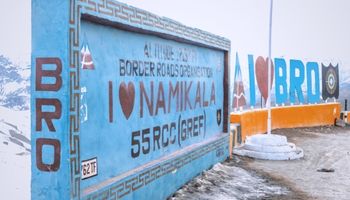
Today, we leave Leh and begin our journey towards Nubra Valley, crossing one of the most famous high-altitude passes in the world, Khardung La. The ascent offers spectacular views of the surrounding mountains, with the landscape changing dramatically as we cross from the Indus Valley into the vast and remote Nubra Valley.
As we descend from Khardung La, the scenery transforms once again. The barren high-altitude mountains give way to the green oasis of Nubra, where the Shyok and Nubra Rivers nourish fields, villages and groves of apricot, willow and poplar trees. This striking contrast between the desert-like mountains and lush valley floor is one of the defining landscapes of Ladakh.
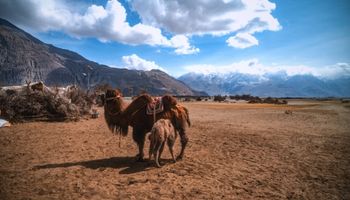
Our journey takes us towards Hunder, one of the most beautiful villages in Nubra Valley. Hunder is famous for its wide sand dunes, traditional Ladakhi homes and the distinctive Bactrian double-humped camels, which are believed to be a legacy of the ancient trade routes that once passed through this region.
The ancient Karakoram trade route connected Ladakh with Central Asia, and Nubra served as an important passage for traders travelling between India, Tibet, Yarkand and beyond. The presence of the Bactrian camels in Hunder is a fascinating reminder of this history.
After reaching Hunder, we check into our accommodation and have the remainder of the day at leisure. You can explore the village, walk among the sand dunes or simply relax and enjoy the remarkable surroundings of the Nubra Valley.
On our second day in Nubra Valley, we leave Hunder and drive deeper into Nubra Valley towards Turtuk, one of the most culturally distinctive villages in Ladakh. Located close to the Line of Control, Turtuk is a beautiful Balti village surrounded by apricot orchards, green fields and dramatic mountains. The village was under Pakistani administration until 1971, when it became part of India following the Indo-Pak war, making its history and location particularly fascinating.
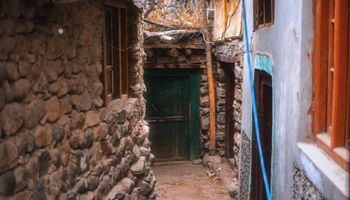
Walking through Turtuk offers a completely different experience from the more familiar Tibetan-Buddhist villages of Ladakh. The village retains a strong Balti cultural identity, with traditional stone houses, narrow lanes, wooden bridges, mosques and terraced fields. Take some time to explore the village and interact with the locals to experience its unique way of life.
From Turtuk, we continue towards Thang, one of the northernmost inhabited settlements in India. Located extremely close to the Line of Control, the village sits in a remote and dramatic landscape with the mountains of the Karakoram dominating the horizon. The journey towards Thang itself is an experience, taking us deeper into one of the most remote corners of Ladakh.
After exploring the area, we begin our return journey towards Hunder. The drive back follows the Shyok Valley, with the stark mountains and changing landscapes providing plenty of opportunities to stop and take in the scenery.
We arrive back in Hunder by evening, where the remainder of the day is free to relax after a memorable journey into the far reaches of Nubra Valley.
After spending 2 memorable nights in Nubra Valley, today we leave Hunder and begin one of the most spectacular drives of the journey towards Pangong Lake, taking the scenic Shyok River route.
We begin our journey with a short drive and quick stop to Diskit Monastery, it is the oldest and largest Buddhist monastery in Ladakh's Nubra Valley, founded in the 14th century by a disciple of Tsong Khapa. The site features a striking 106-foot statue of Maitreya Buddha and offers panoramic valley views.
We then drive through the notorious offbeat stretch of Shyok River. This road cuts through the remote landscapes of eastern Ladakh, following the Shyok River between towering mountains and deep valleys. The dramatic scenery and relatively isolated nature of the route make this one of the most memorable drives of the expedition.
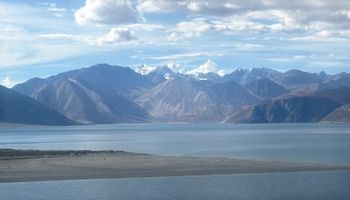
As we continue towards Pangong, the landscape gradually becomes more rugged and expansive. We pass through the small settlements of Maan and Merak, located along the shores of Pangong Lake. These remote villages offer a glimpse into the simple way of life of the communities living in one of the world's most extraordinary high-altitude environments. As we approach Pangong Lake, the landscape opens dramatically to reveal its famous deep blue waters surrounded by barren mountains. Stretching across the India-China border, Pangong is one of Ladakh's most iconic natural landmarks, with the colour of the lake changing subtly with the movement of the sun and clouds.
Later in the evening, we check into our accommodation and spend the time relaxing with the spectacular scenery of Pangong Lake.
After breakfast, we leave the shores of Pangong Lake and begin our journey deeper into the remote landscapes of eastern Ladakh. Today's route takes us across some of the highest and most spectacular terrain of the expedition, including the Rezang La War Memorial and the legendary Umling La.
Our first major stop is the Rezang La War Memorial, dedicated to the soldiers of Charlie Company, 13 Kumaon, who fought one of the most remarkable battles of the 1962 Indo-China War. The battle at Rezang La is remembered for the extraordinary courage and sacrifice of Major Shaitan Singh and his men, who fought against overwhelming odds in extremely harsh conditions.
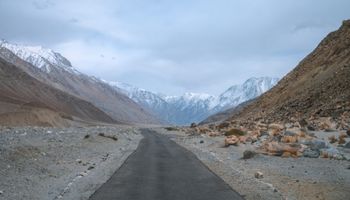
From Rezang La, we continue towards Umling La, one of the defining highlights of this Ladakh road trip. Rising to an altitude of over 19,000 feet, Umling La is among the world's highest motorable roads. The approach takes us across an incredibly barren and remote high-altitude landscape, where the mountains stretch endlessly into the distance and the feeling of isolation is extraordinary.
After crossing Umling La, we descend gradually towards Hanle, a remote village located in the Changthang region of Ladakh. Hanle is best known for the Indian Astronomical Observatory, located in one of the world's most exceptional regions for astronomical observation due to its high altitude, dry climate and extremely clear skies. As evening approaches, we arrive in Hanle and settle into our accommodation.
Away from the lights and activity of the more popular tourist areas, Hanle offers a rare sense of silence and remoteness, making it the perfect place to experience the vastness of eastern Ladakh and, on a clear night, its spectacular star-filled skies.
After breakfast, we begin our long and spectacular journey back towards Leh, travelling through some of the most remote landscapes of eastern Ladakh. Before leaving Hanle, we visit the Indian Astronomical Observatory, located at an exceptionally high altitude in one of the world's best regions for astronomical observation. The clear, dry atmosphere and minimal light pollution make Hanle an extraordinary place for studying the night sky.
We then continue towards Chumur, a remote settlement in the Changthang region located close to the India-China border. The landscape becomes increasingly vast and isolated as we travel through the high-altitude plains, with sweeping valleys, rugged mountains and almost no signs of habitation for long stretches of the journey.
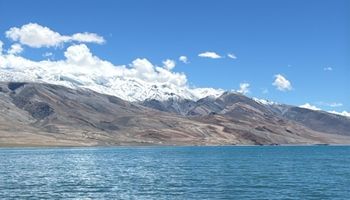
From Chumur, we continue towards Tso Moriri, one of Ladakh's most beautiful high-altitude lakes. Surrounded by the mountains of the Changthang Plateau, the lake is a spectacular contrast of deep blue waters against the stark, barren landscape. Tso Moriri is also an important habitat for several species of migratory and high-altitude wildlife, making the journey here as rewarding for its natural beauty as it is for the sense of remoteness.
We then continue our journey towards Mahe Bridge, crossing the Indus River before making our way towards Chumathang. Known for its natural hot springs, Chumathang has long been a popular stop for travellers crossing the high-altitude Changthang region. The mineral-rich waters emerge naturally from the earth and provide a fascinating contrast to the cold mountain environment surrounding them.
From Chumathang, we follow the Indus Valley back towards Leh, with the landscape gradually becoming more familiar as we approach the city. After this long day on the road, we arrive in Leh by evening and check into our accommodation, bringing our expedition through the remote eastern landscapes of Ladakh almost to its conclusion.
After breakfast 9 nights in the grand landscapes of Ladakh, today we bid farewell to the mountains of Ladakh as your Ultimate Ladakh Road Trip comes to an end. Over the past ten days, you have travelled far beyond the usual Ladakh circuit from the historic landscapes of Kargil and the remote villages of Batalik and Nubra, to the shores of Pangong Lake, the battlefields of Rezang La, the extraordinary heights of Umling La and the remote wilderness of Changthang.
This journey has taken you through ancient villages, high mountain passes, borderlands, war memorials, monasteries and some of the most spectacular landscapes in the Himalayas. More than just a road trip, it has been an opportunity to experience the many different faces of Ladakh - its history, people, culture, wilderness and incredible roads.
After breakfast, we transfer you to Kushok Bakula Rimpochee Airport in Leh for your onward journey, carrying with you memories of an unforgettable expedition through the Ultimate Ladakh Road Trip.
End of the journey.

Experiece the best of McLedoganj with this short weekend trek. Trek & camp overnight at Triund. With Pink House\'s state of the art camping gear, trek to 9500 feet to reach Triund and camp overnight with millions of Himalayanstars. Be it Paragliding, or touring around McLeodganj, or climbing mountains, amazing packages. Trek & camp overnight at Triund. With Pink House\'s state of the art camping gear, trek to 9500 feet to reach Triund and camp overnight.
Experiece the best of McLedoganj with this short weekend trek. Trek & camp overnight at Triund. With Pink House\'s state of the art camping gear, trek to 9500 feet to reach Triund and camp overnight with millions of Himalayanstars. Be it Paragliding, or touring around McLeodganj, or climbing mountains, amazing packages. Trek & camp overnight at Triund. With Pink House\'s state of the art camping gear, trek to 9500 feet to reach Triund and camp overnight.
Experiece the best of McLedoganj with this short weekend trek. Trek & camp overnight at Triund. With Pink House\'s state of the art camping gear, trek to 9500 feet to reach Triund and camp overnight with millions of Himalayanstars. Be it Paragliding, or touring around McLeodganj, or climbing mountains, amazing packages. Trek & camp overnight at Triund. With Pink House\'s state of the art camping gear, trek to 9500 feet to reach Triund and camp overnight.

37 years of experience in organising tours within the Himalayas

The only local Spiti travel company to be Recommended by Lonely Planet

The best local prices minus any middle man or commissions.
Arrival in Leh and Transfer to Sham Valley
Sham Valley to Kargil via Batalik
Kargil - Drass - Kargil War Memorial - Lamochen View Point - Kargil City View Point (Sunset) - Kargil
Kargil - Hunderman Village & LOC View Point - Namika la - Lamayuru - Sangam View Point - Pathar Sahib Gurudwara - Leh
Leh - Khardung La - Sand Dunes Hunder (Nubra Valley)
Hunder - Turtuk - Thang - Hunder
Nubra - Diskit Monastery - Pangong Lake (via Shyok river road)
Pangong Lake - Rezang La War Memorial - Umling La - Hanle
Hanle - Indian Astronomical Observatory - Chumur - Tso Moriri - Mahe Bridge - Chumathang - Leh
Depart from Leh
You might want to keep a copy of the itinerary with you!
Download the PDFShare this trip
6 Days Road Trip
6-Day - Spiti Valley via Manali - Private Innova Tour, Summer

10 Days Road Trip
Spiti Valley and Kinnaur - 10 Days Summer - Private Innova Circuit Trip

7 Days Road Trip
Spiti Valley - 7 Days April/May - Spring Fixed Departure Tour

4 Days Road Trip
Kinnaur Valley - Private Road Trip
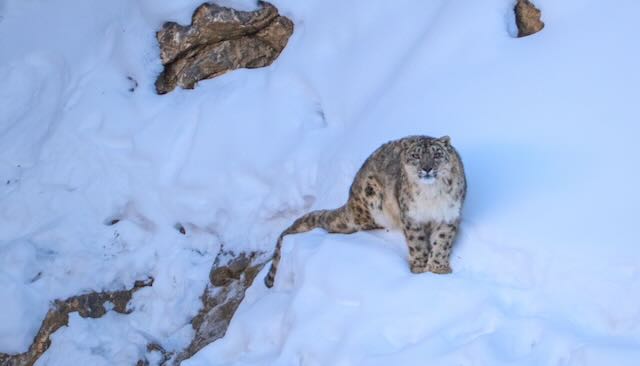
10 Days Road Trip
Snow Leopard Photography Tour - Premium 4x4 SUV - Winter Spiti Expedition
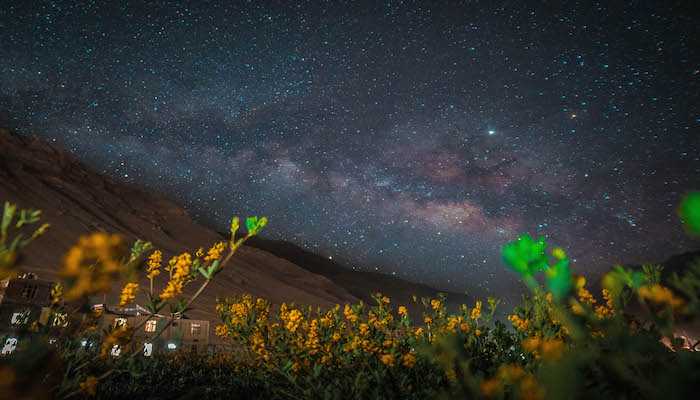
7 Days Road Trip
Spiti Valley and Kinnaur via Chandratal Lake - 7 Days - Group Departure
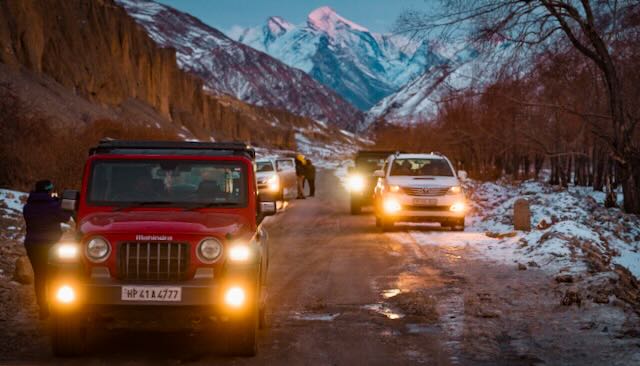
8 Days Road Trip
Ultimate Winter - 4x4 SUV Spiti Expedition with Snow Leopard Spotting

7 Days Road Trip
Zanskar Valley - Summer - 7 Days - Group Departure Tour
21 Days Road Trip
The Great Himalayan Silk Route - Spiti, Zanskar & Ladakh - Road Trip